Building Back Body: Using Hydrocolloids to Restore Mouthfeel in Reduced-Sugar Juices
By Jessica Schroeder, Associate Principal Scientist, Technical Services
Nailing Mouthfeel is Critical for Reduced-Sugar Beverages
Consumers expect more than just flavor and sweetness from their juice beverages—they expect body. Mouthfeel is a critical part of enjoyment, yet this is where reduced-sugar products often fall short. And that’s a significant challenge considering the growing demand for lower-sugar options.
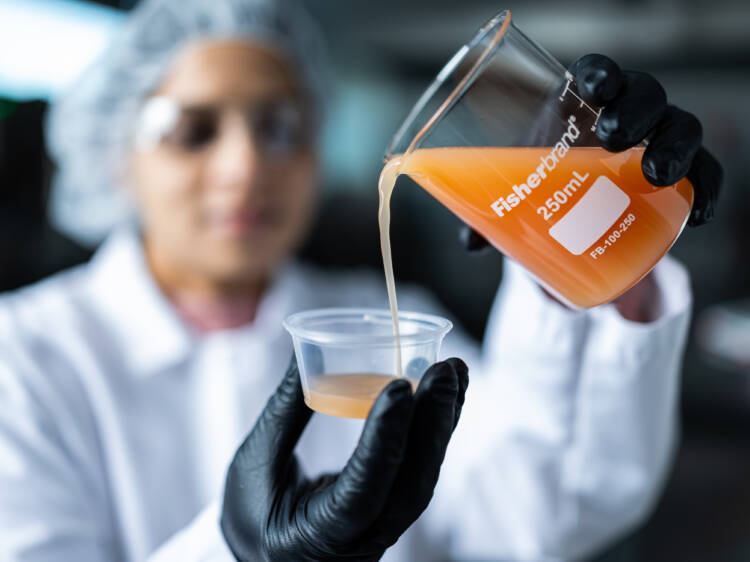
Recent data shows that 61% of US consumers would consume more juice and juice drinks if they weren’t so concerned about sugar content.1 That’s part of an overall trend towards reducing sugar consumption, with juices being hit especially hard; 60% of consumers cut back their juice consumption because of sugar in 2025, up 13 percentage points from the previous year.2Yet, the challenge remains that when sugar or juice solids are removed, the drink can turn thin and watery. It may deliver on sweetness and flavor, but not on overall satisfaction. We recently demonstrated this for customers, comparing a juice drink sweetened with stevia to several variations made with hydrocolloids to illustrate the differences in mouthfeel. The control—a 20% orange juice drink sweetened with our All-Americas Stevia Reb M—was noticeably thinner than a sugar-sweetened product or a beverage with higher juice content. By adding different hydrocolloids, we were able to bring back the kind of texture and weight consumers expect, creating a more satisfying drinking experience. It was a tangible (and tasty) example of how hydrocolloids help rebuild the texture, viscosity, and body in reduced-sugar juices.
How Hydrocolloids Work
In a nutshell, hydrocolloids are ingredients that form gels when they come into contact with water. They bind to water molecules and create networks that give beverages viscosity, suspension, and body. The usage level is key. At high concentrations, hydrocolloids can form firm gels, which is why, for example, pectin is used to make jam or jelly. At lower levels, the same hydrocolloid can give a juice a fuller, more rounded mouthfeel without turning it into a solid. Different hydrocolloids bring different qualities to the table. Some hydrate only when heated, while others work instantly in cold systems. Some add thickness, while others suspend particles like pulp or cocoa to prevent separation. Understanding those nuances is essential for selecting the right one for a given product.
Four Ways to Build Back Body in Reduced-Sugar Juices
Our demonstration looked at four options—pectin, xanthan gum, gellan gum, and citrus fiber—each chosen for its stability in acidic conditions (important for juices, which often have pH levels around 3.3). By comparing them side by side, we were able to highlight not only the textural outcomes but also practical considerations like processing, cost, and labeling. The best choice for you? That depends on the specific requirements for your product formulation. Let’s look at our four proven hydrocolloids for meeting consumer expectations for mouthfeel in reduced-sugar juice drinks.
Pectin
Derived from citrus peels, pectin is a familiar, consumer-friendly ingredient, and it’s a natural fit for juice. In fact, our GENU® Pectin is upcycled from citrus peels left over from the juice industry. That makes it a great solution for anyone concerned with clean-label considerations.
To function, pectin requires heat—about 60°C (140°F), to hydrate fully. Once hydrated, it builds viscosity and provides a full-bodied mouthfeel that closely resembles what sugar contributes. In our demonstration, pectin restored balance to the reduced-sugar juice, making it taste closer to a higher juice percentage or sucrose-sweetened product. So, if you’re making a juice beverage with a hot fill process, pectin may be the right choice.
Gellan Gum
Gellan gum requires higher heat than pectin to hydrate—around 70°C (158°F)—but once activated, it delivers unique functionality, forming a fluid gel that suspends insoluble particles. That makes it especially valuable for juices with pulp or for beverages with calcium, cocoa, or other added ingredients.
In practice, our KELCOGEL® HF-B Gellan Gum prevents the separation that can occur when a juice sits on the shelf, avoiding the hard-packed layer at the bottom of the bottle. In our demo, tasters found it also gave the juice a slightly weightier mouthfeel. For consumers, that added weight signals a more premium product.
Xanthan Gum
Like pectin, xanthan gum adds body to juices—if it’s used at the right levels. If overused, however, it can make it syrupy. That sensitivity makes usage level critical, but it’s something we’ve perfected.
Part of what’s great about xanthan gum, like our KELTROL® AP, for certain applications is that it doesn’t require heat to activate. Once it encounters water and is dispersed throughout the system through mechanical mixing, it starts hydrating right away. Being cold-soluble makes it ideal for powdered mixes or ready-to-drink shakes where heat isn’t part of the process.
Citrus Fiber
Like pectin, this ingredient comes from citrus peels, which makes it a natural fit for juice formulations. It is also upcycled (the peels would otherwise go to animal feed), which adds a sustainability story to our NUTRAVA® Citrus Fiber that resonates with consumers.
Like xanthan, citrus fiber doesn’t need heat to function, but it does require high shear; think homogenization or aggressive mixing. Once dispersed, it behaves almost like a cotton ball pulled apart, letting water in and creating viscosity and suspension. The result is a balanced, full-bodied mouthfeel with clean-label appeal.
It’s worth noting that, while citrus fiber does contain fiber, it isn’t typically used for fiber enrichment at meaningful levels. Because it builds viscosity, you’d reach a gelled texture before hitting a significant dietary fiber claim. For fiber enrichment, we’d recommend pairing it with one of our soluble fibers, like PROMITOR® Soluble Corn Fiber or STA-LITE® Polydextrose, and stick with citrus fiber as the stabilizer.
What Brands Should Consider in Reduced-Sugar Juice Formulations
Choosing the right hydrocolloid goes beyond sensory results. Processing requirements are critical: does your system have heat, or do you need something cold-soluble? Can your equipment provide the necessary high shear for citrus fiber? The pH of your product also matters. In acidic beverages like juice, only certain hydrocolloids remain stable. Cost is another factor, since usage levels and ingredient price points vary significantly.
And then there’s consumer perception. “Clean label” means different things to different brands. Pectin and citrus fiber are usually considered “clean label” and are already familiar in juice. Gellan gum is widely accepted, too, being prominent in plant-based milks and shakes.
Ultimately, the right choice depends on a brand’s goals: process feasibility, consumer expectations, and desired sensory profile. That’s where our technical service team comes in; we work closely with you to understand your targets and guide you toward the best solution.
Toward a Full-Bodied Future
The takeaway is clear: your sugar reduction doesn’t have to mean a thin, watery beverage. With the right hydrocolloid, you can create juices and other drinks that are lower in sugar yet still deliver on consumer expectations for texture and satisfaction.
All four hydrocolloids successfully built back body in a reduced-sugar juice, though each brings something slightly different to the table. Pectin and citrus fiber both provided a full-bodied mouthfeel that felt natural in a juice application, reflecting their citrus origins. Xanthan gum is highly effective and only requires very small quantities. Gellan gum is particularly effective for suspension, keeping pulp and other particles evenly distributed, and contributing to a weightier mouthfeel.
The best choice for you? That depends on the product, processing setup, and what your brand wants to deliver to its consumers.
This is part of a broader capability. At Tate & Lyle, we can combine our sweetening solutions with hydrocolloid expertise. The result? Successful reformulations that work. That could apply to launching a new reduced-sugar line, optimizing an existing product, or finding cost-effective alternatives in a challenging supply chain environment.
Flavor will always be King. But mouthfeel is nearly as important. And when consumers take a sip, they notice. By working with us and our dedicated team of experts, we can help you ensure your better-for-you juice-based beverages deliver the mouthfeel experience consumers want.
Curious about what’s possible? Contact us today.
1 Mintel, Reasons to consume less juice and juice drinks, 2025
2 Mintel, Attitudes towards juice and juice drinks, 2025